Tropical Fantasy Without Whimsy
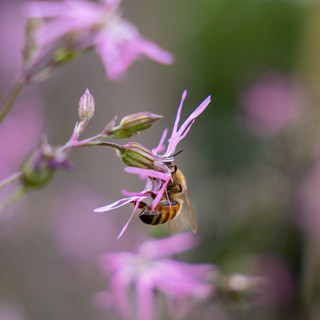

When people hear tropical fantasy, they may picture something bright, playful, lush, and sun-drenched.
And to be fair, I love lushness.
I love flowering courtyards, painted doors, citrus-colored walls, turquoise water, sea glass, market awnings, warm stone, heavy fruit, palms in the wind, and the kind of light that makes an entire street feel alive.
But when I think about the tropical elements of Vemados, I am not trying to build something whimsical.
I am trying to build something beautiful and dangerous.
That distinction matters to me.
Vemados is a world of color, but the color is not there to make the world feel soft. It is there because real places are layered. Warmth and danger can exist in the same street. A port can be filled with flowers and still be full of spies. A market can be bright with fruit, cloth, and painted walls while rumors move through it like a second trade route. A coastline can be breathtaking and still be the place where ships disappear.
That is the visual tension I keep returning to.
Tropical, but not weightless.
Beautiful, but not harmless.
Lush, but not innocent.
I think fantasy sometimes treats darkness and seriousness as if they have to look gray, cold, medieval, or austere. There is nothing wrong with those aesthetics, but they are not the only way for a world to feel complex.
A sunlit place can hold old grief.
A colorful city can be politically unstable.
A flowering courtyard can be the site of a betrayal.
A bright harbor can be the doorway to exile, smuggling, sanctuary, or war.
That is the kind of tropical fantasy I am interested in.
Not a vacation postcard.
A living world.
A world where climate, trade, migration, architecture, ecology, magic, and history all leave visible marks. Where color comes from weather, landscape, materials, commerce, ceremony, status, scarcity, abundance, and adaptation. Where beauty is part of the world’s truth, but never the whole truth.
In Vemados, tropical and coastal imagery often means contrast.
Sun-washed walls beside storm-dark water.
Orange flowers against old stone.
Bright market cloth under military banners.
Turquoise harbors filled with ships carrying secrets.
Green courtyards behind locked gates.
Painted doors opening into rooms where power is negotiated quietly.
Lanterns glowing over streets where no one says everything they know.
That contrast is one of the reasons I love building this world visually.
I do not want every serious place to look desaturated. I do not want every dangerous place to announce itself with shadow. Sometimes danger is more interesting when it arrives in a beautiful room. Sometimes power is more unsettling when it is surrounded by flowers, music, heat, salt air, and the sound of trade moving through the streets.
The visual language of Vemados is full of that tension.
Parchment and deep water.
Clay walls and dark red blood.
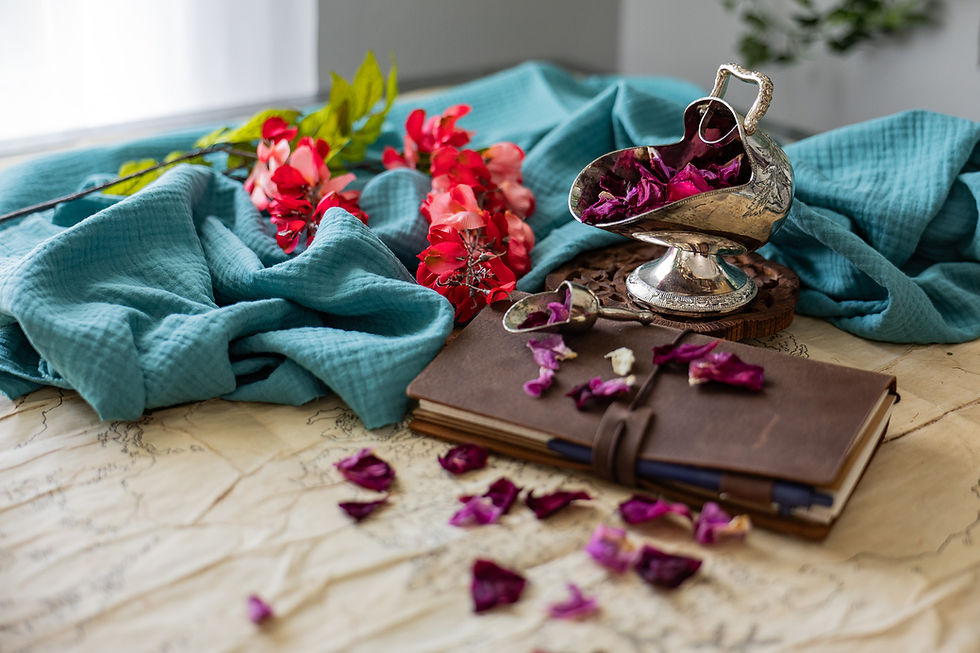
Bright flowers and old maps.
Sea glass and storm clouds.
Green courtyards and hidden doors.
Warm light and political pressure.
That is why the colors matter so much.
A palette can tell a reader what kind of world they are entering before they know the names of the places. If a world is all darkness, the reader expects one kind of danger. If it is all brightness, they expect another kind of story. But Vemados needs both.
It needs beauty that draws you in.
And danger that makes you question what you have entered.
Tropical fantasy without whimsy means allowing lush settings to have weight. It means trusting bright colors to carry serious stories. It means letting coastal beauty exist alongside political tension, hidden histories, dangerous magic, colonial ambition, piracy, grief, loyalty, betrayal, and survival.
It means a port city can smell like salt, flowers, spice, fish, rain, smoke, and old stone — and still be the place where a nation’s future changes hands.
It means visual inspiration does not have to be gloomy to be mature.
It can be vivid.
It can be warm.
It can be alive.
And it can still be full of consequences.
That is part of what I want Vemados to feel like: a world with sun on the walls and secrets under the floorboards. A world where color does not erase danger, and beauty does not promise safety.
Because sometimes the most dangerous door in the city is painted orange.
Sometimes the prettiest harbor is the one no one should enter.
Sometimes the flowers are not decoration.
Sometimes they are a warning.
That, to me, is tropical fantasy without whimsy.
For more visual inspiration behind Vemados and The Summit Series, explore the Visual References archive or visit my Pinterest boards, where I collect images, colors, textures, and atmospheres that help shape the world behind the story.


Comments